
Thai phrases · Thank you
How to say “thank you” in Thai
Say ขอบคุณ kòrp-kun and finish with a polite ending. A man says ขอบคุณครับ Kòrp-kun kráp. A woman says ขอบคุณค่ะ Kòrp-kun kà.
Recorded by native Thai speakers, female and male.
In the Kruu Jaidee app
Don’t just read it. Say it, use it, keep it.
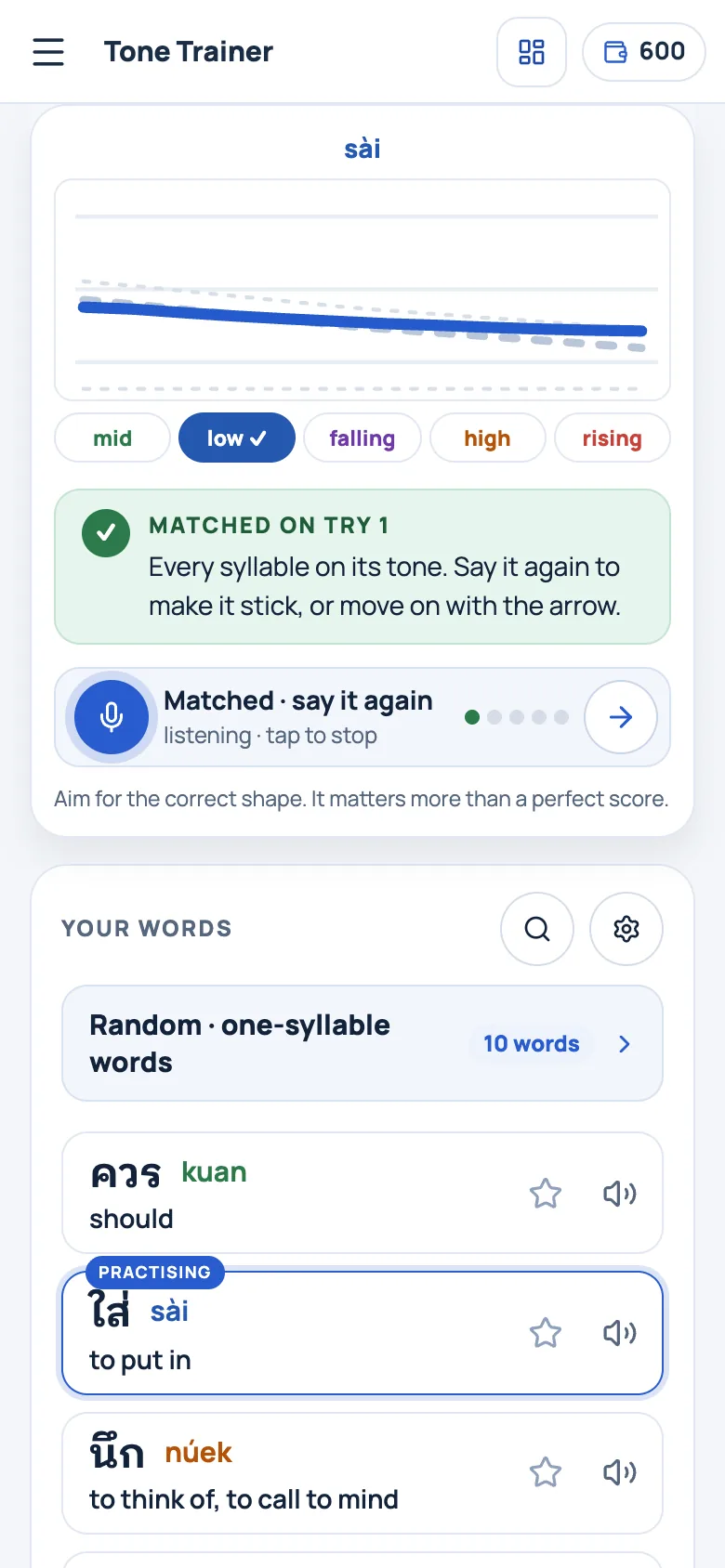
Say it. See your tone.
The Tone Trainer draws your pitch over the right shape, syllable by syllable, and tells you when it matches.
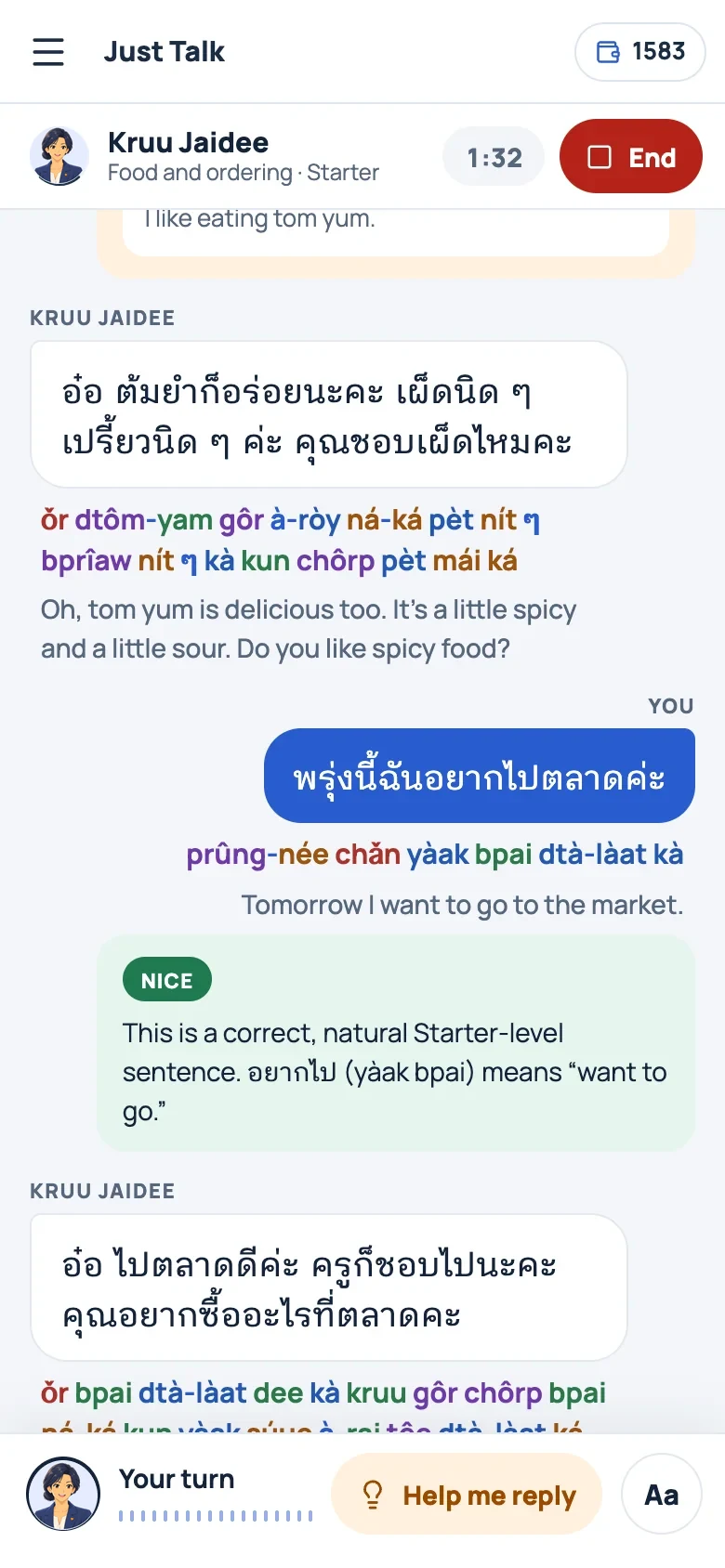
Use it in a real conversation.
Talk with Kruu Jaidee about food, shopping or your day. She answers in Thai, with karaoke, and gives you real-time feedback.
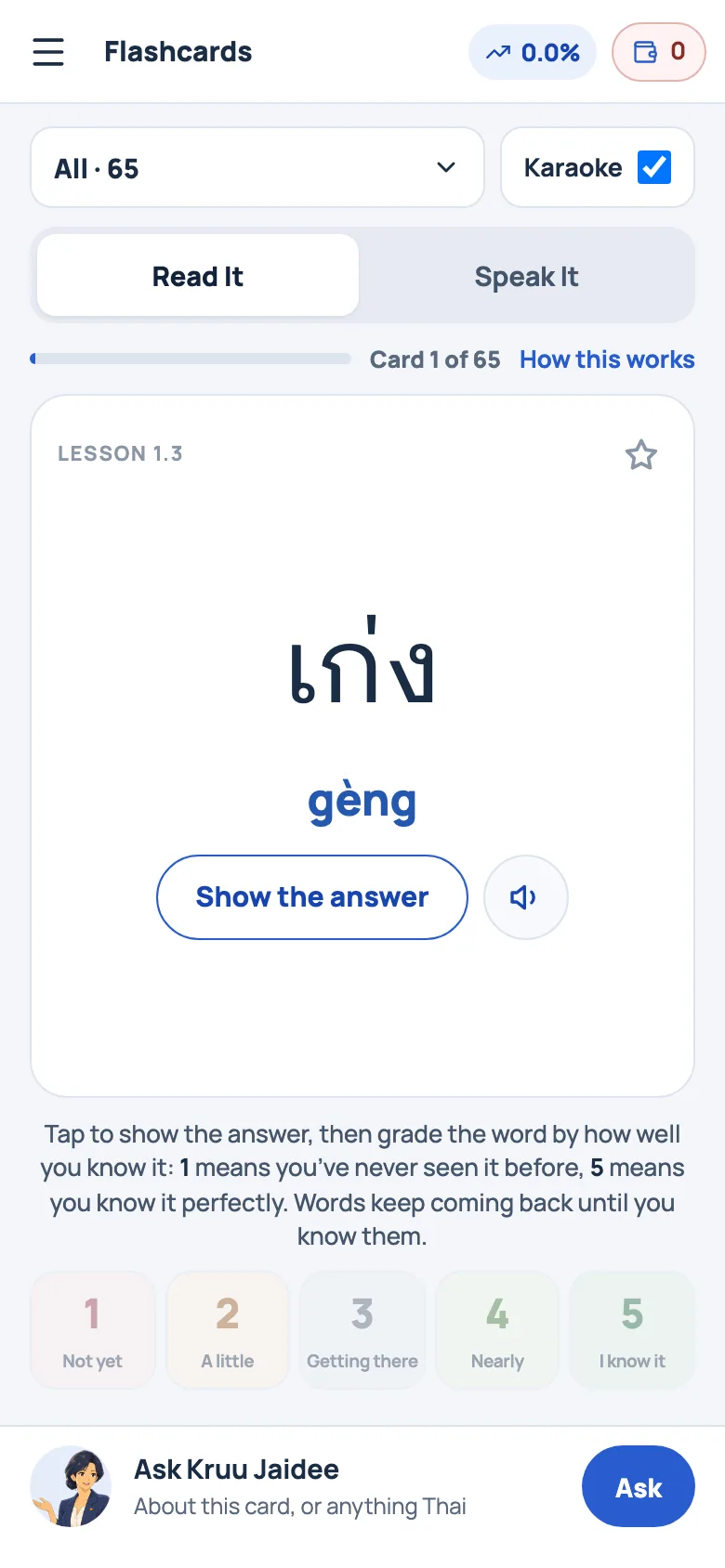
Keep it.
Words you find hard are tagged tricky automatically, and come back for practice across all the tools until you know them.
Why the ending changes
Why do men and women say it differently?
ครับ kráp and ค่ะ kà are polite endings. On their own they add politeness, not meaning. The ending matches who is speaking: men say ครับ kráp, women say ค่ะ kà, whoever they are talking to. Leaving it off sounds abrupt to Thai ears.
More ways to say it
Thank you very much, and how to reply
Hear it in a conversation · Lesson 1, at a café
Listen for the endings
Get the tone right
Two tones in kòrp-kun
The marks in the romanisation are the tones. kòrp is low, kun is mid: start low, then come back to your normal voice.
Say it into the Tone Trainer and it draws your pitch next to the right shape. The five Thai tones, with audio
Try kòrp-kun in the Tone Trainer, freeQuestions
Saying thank you in Thai: common questions
Do women say kráp?
No. Women end with ค่ะ kà, and คะ ká in a question. Men end with ครับ kráp.
Is it khob khun, kop khun or kòrp-kun?
All three are English spellings of the same Thai, ขอบคุณ. Kruu Jaidee writes kòrp-kun, with marks that show the tones.
How do you say thank you very much?
Add มาก mâak, “very”: ขอบคุณมากครับ Kòrp-kun mâak kráp for a man, ขอบคุณมากค่ะ Kòrp-kun mâak kà for a woman.
What do Thais say back?
Usually ไม่เป็นไร mâi-bpen-rai: never mind, no problem, you're welcome.
Say it out loud, and see how you sound
The first 5 lessons, the tone practice and the free tools are free, with no card and no email. Hear both voices, say it yourself, and see your tone.