
Thai phrases · Polite endings
Kráp and kà: the Thai polite endings
Thai adds a polite ending to most sentences. Men say ครับ kráp. Women say ค่ะ kà, and คะ ká when they ask a question.
Recorded by native Thai speakers, female and male.
How to use them
Where do kráp and kà go?
The ending matches who is speaking, not who is listening. It adds politeness, not meaning, and you'll hear it at the end of most polite sentences. Use it with anyone you don't know well and you'll never be wrong.
Lesson 1 in the Kruu Jaidee app
Polite endings are in your first lesson, and in every one after it.
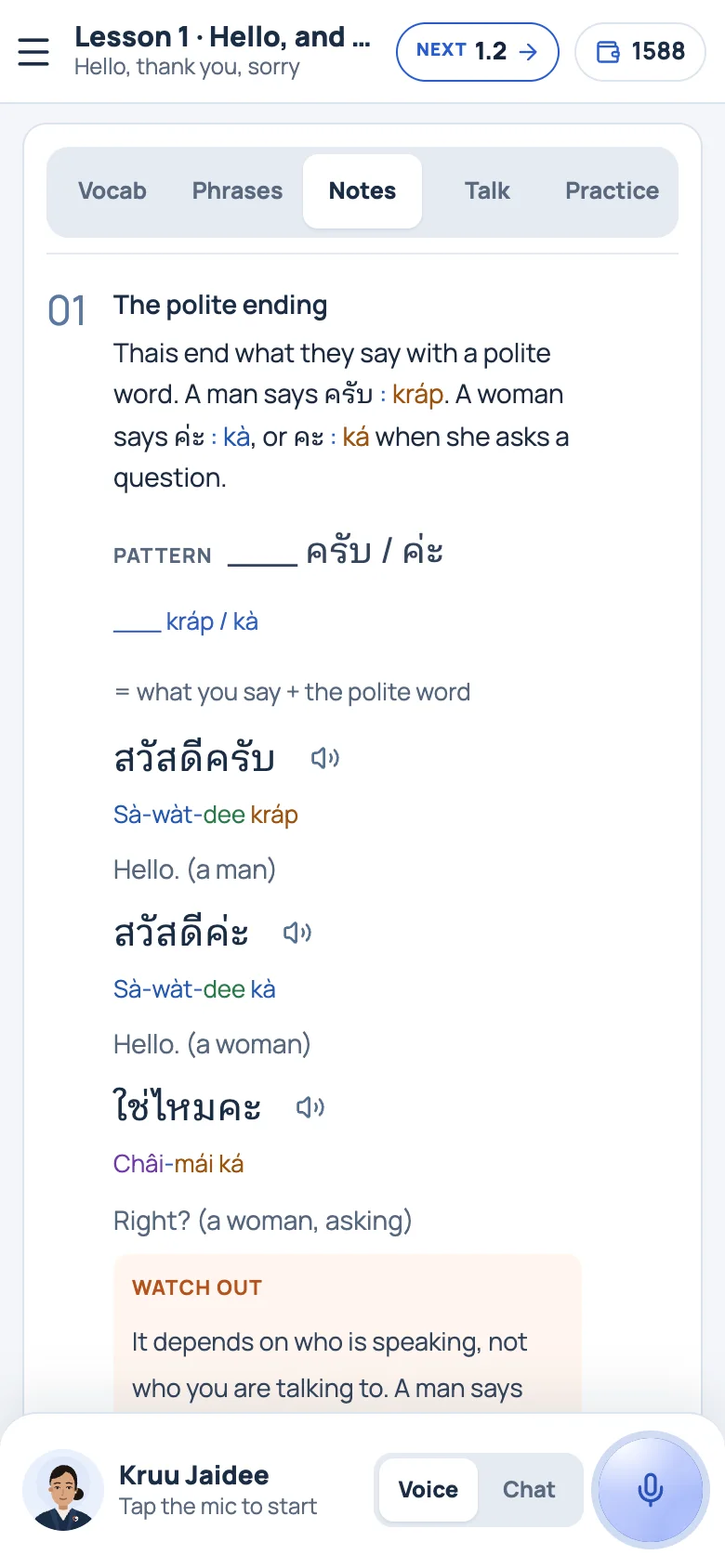
Learn the pattern.
Plain-English notes show how it works: what you say, plus the polite ending.
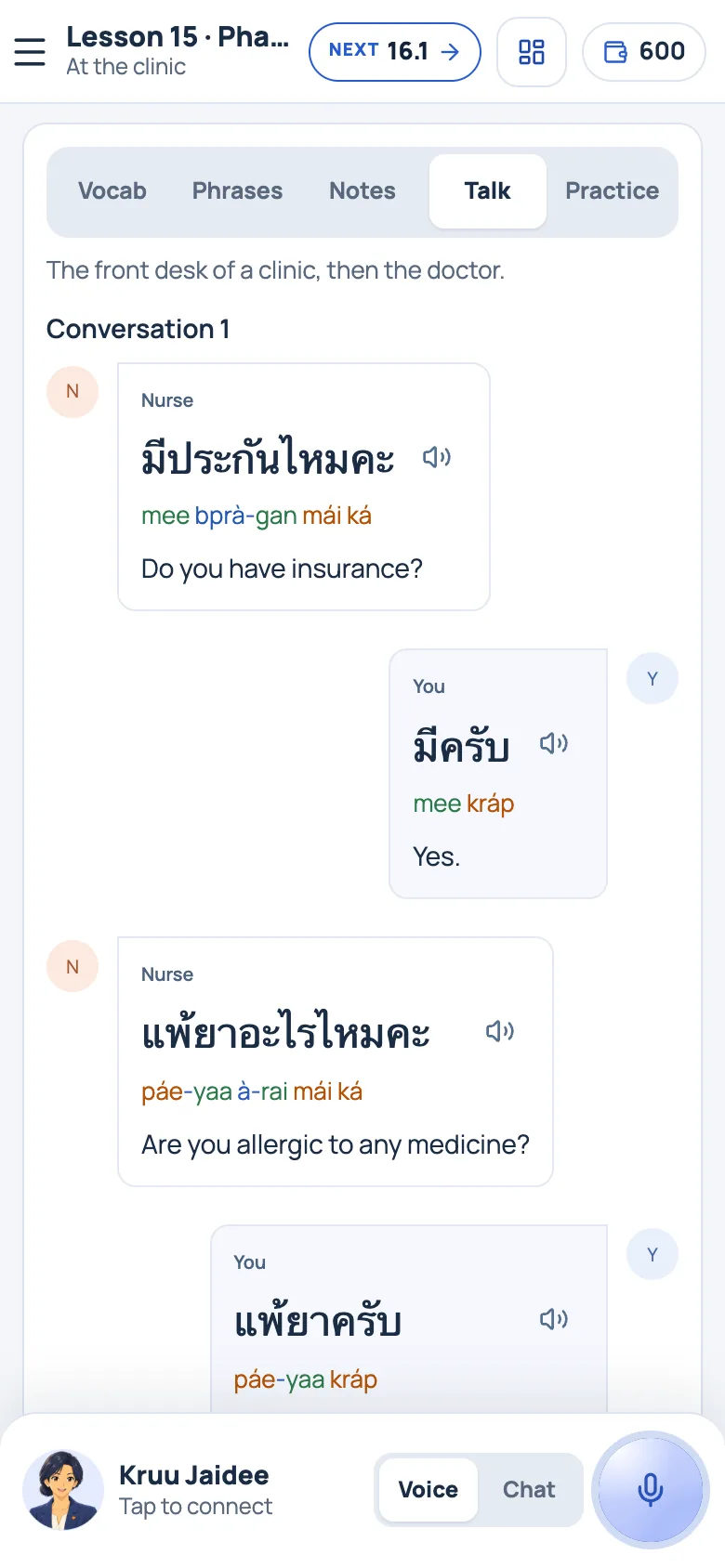
Hear it in real scenes.
At the clinic, the café, the market: every line in Thai with karaoke, recorded by native speakers, female and male.

Say it to Kruu Jaidee.
Talk with her out loud, and ask her anything about Thai, like why kà becomes ká in a question.
The same rule for “I”
Men and women also say “I” differently
Hear it in conversations · Lesson 1
Listen for kà, ká and kráp
Questions
Kráp and kà: common questions
What does kráp mean?
Nothing on its own. ครับ kráp makes a man's sentence polite, and said alone it means “yes” or “OK”.
Is it krub, khrap or kráp?
All are English spellings of the same Thai, ครับ. Kruu Jaidee writes kráp, with a mark that shows the tone.
What is the difference between kà and ká?
Women end a statement with ค่ะ kà and a question with คะ ká. They are written differently and said with a different tone.
Can a woman say kráp?
The ending goes with the speaker: women say ค่ะ kà and คะ ká, men say ครับ kráp. Kruu Jaidee's lessons teach both, with native Thai speakers, female and male.
Practise the endings out loud
The first 5 lessons, the tone practice and the free tools are free, with no card and no email. Every word and phrase is recorded by native Thai speakers, female and male.